Back to explore0 copiesUpdated 1 month ago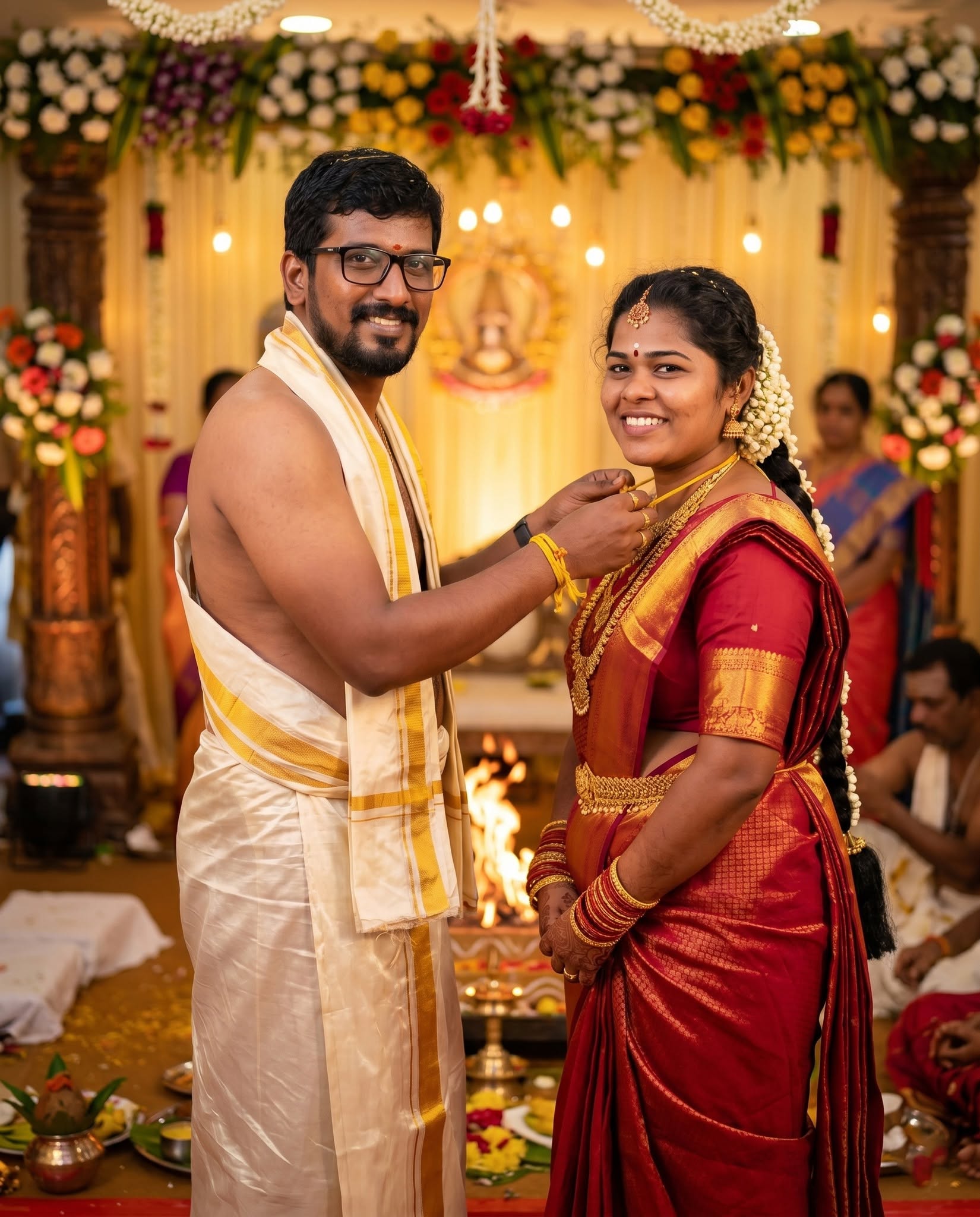
Wedding
general
advanced
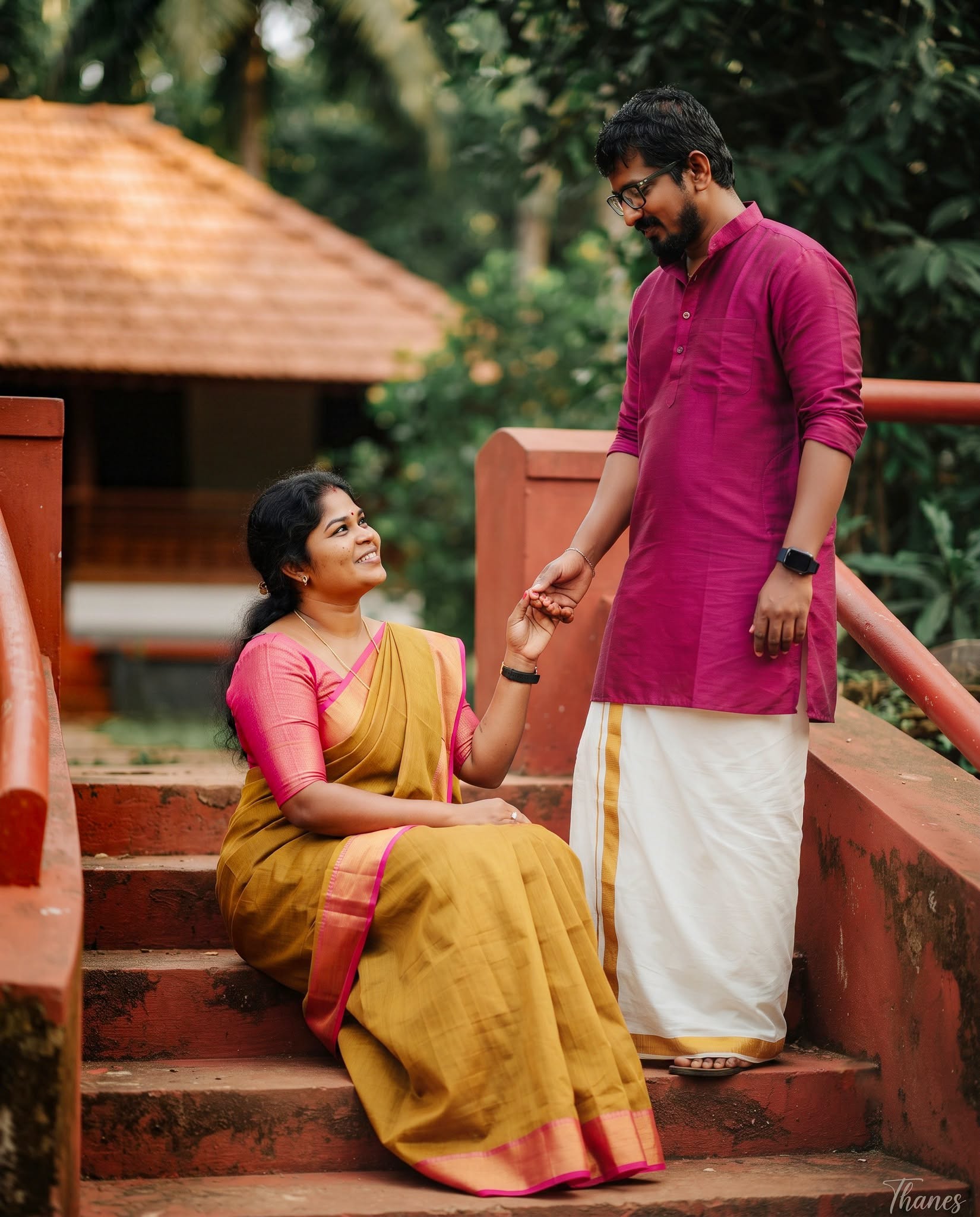
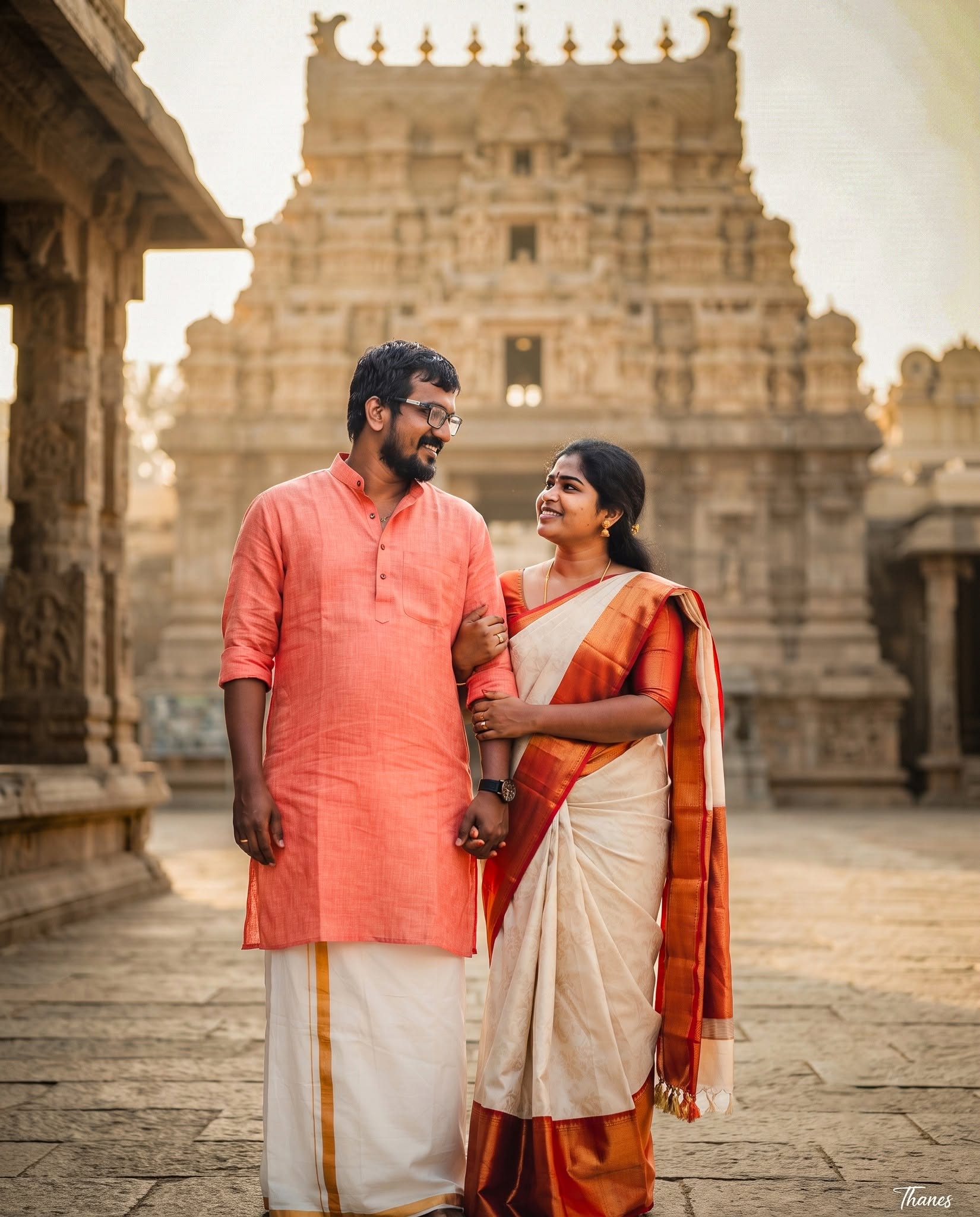
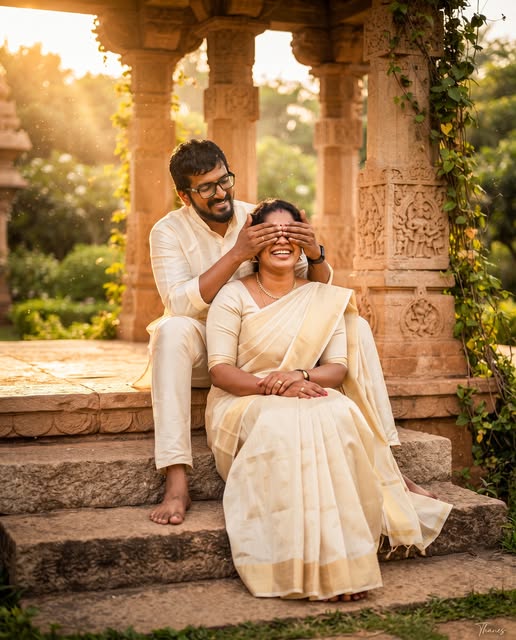
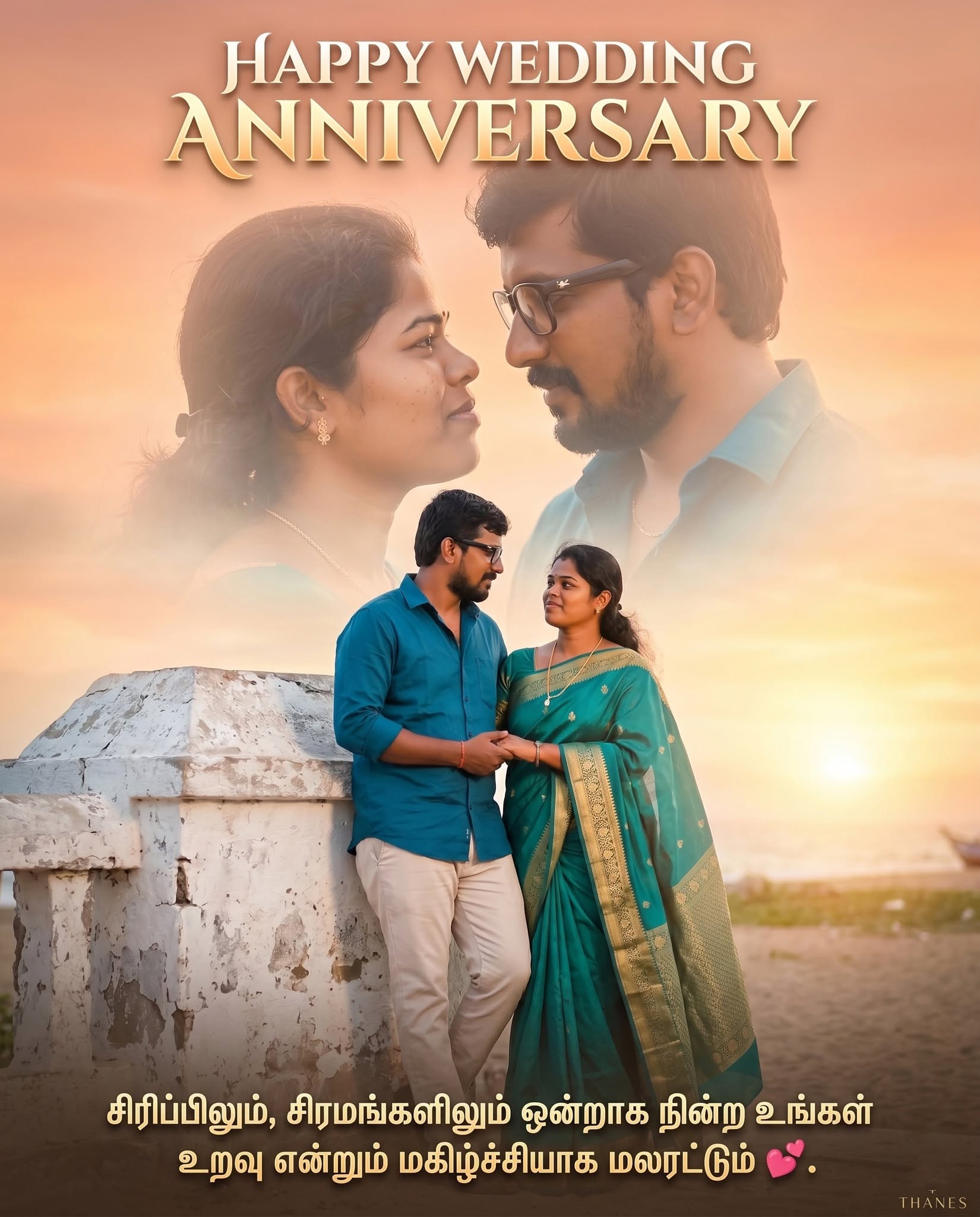
Sacred Thaali Moment – South Indian Wedding Portrait
A timeless cinematic wedding portrait capturing the sacred Thaali ceremony with the bride and groom facing the camera in an elegant traditional setting, surrounded by warm golden light and festive details while preserving both original facial identities exactly.
0.0 (0)
Prompt content
Output Size: 1080 × 1350 pixels (4:5 aspect ratio), optimized for Facebook and Instagram portrait posts.
STRICT FACE PRESERVATION (HIGHEST PRIORITY)
Use the uploaded couple photo as the only facial reference. The man and woman must stand facing directly toward the camera, posing naturally like a professional wedding portrait while the wedding ritual is taking place.
The faces of both the man and the woman must remain 100% identical to the original uploaded photo.
Under no circumstances should the AI:
Change the face
Regenerate the face
Beautify the face
Enhance the face
Redesign the face
Reinterpret the face
Modify facial identity in any way
Maintain 100% face matching, including:
Eyes,Eyebrows,Nose,Lips,Ears,Jawline,Cheeks,Forehead,Skin texture
Facial proportions
Facial expression
Overall identity
Face preservation is the highest priority and overrides every other instruction.
POSE (IMPORTANT)
The bride and groom must stand straight and front-facing, looking toward the camera exactly like they are posing for a professional wedding photograph.
They should not be shown in side view or profile view.
Their upper bodies and faces should be clearly visible.
The groom should be slightly turned toward the bride while tying the traditional Thaali (Mangalsutra), but both faces must remain clearly visible from the front.
The bride should gently tilt her head with a natural happy smile while facing the camera.
Both should appear naturally posed for a real wedding photograph.
SCENE
Create an ultra-realistic, photorealistic, cinematic South Indian wedding ceremony capturing the sacred moment when the groom is tying the Thaali around the bride's neck.
The groom should naturally hold the sacred yellow thread while tying it.
The bride should smile with genuine happiness and emotion.
Their body language and hand positions must look completely natural and authentic.
REAL PHOTOGRAPH STYLE
The final image must look exactly like a professional DSLR/cinema wedding photograph.
It must NOT look like:
Oil painting
Illustration
Digital artwork
Sketch
Cartoon
Anime
3D render
CGI
AI-generated art
It should be indistinguishable from a real wedding photograph.
BRIDE
Dress the bride in a luxurious traditional South Indian bridal look:
Rich red silk saree
Elegant gold woven border
Traditional forehead ornament
Multiple heavy gold necklaces
Traditional gold earrings
Gold bangles
Decorative gold waist belt
Hair:
Long bridal braid
Decorated with fresh white jasmine flowers
GROOM
Dress the groom in traditional South Indian wedding attire:
Elegant silk dhoti
Traditional silk shoulder cloth (Angavastram)
He should have a joyful, respectful, and emotional expression while tying the Thaali.
BACKGROUND
Include:
Beautiful traditional wedding decorations
Fresh flower garlands
Sacred ceremonial fire (Homam)
Warm golden lighting
Rich festive atmosphere
CINEMATIC QUALITY
Professional DSLR photography aesthetics
Hyper-realistic
Hyper-detailed
Natural skin texture
Realistic lighting
Realistic shadows
HDR quality
Soft bokeh background
Shallow depth of field
Movie-style cinematic color grading
8K ultra-high resolution
FINAL MANDATORY INSTRUCTION
The AI may ONLY change:
Clothing,Jewelry,Hairstyle
Pose
Wedding environment
Background
The AI must NOT change:
Face,Eyes,Eyebrows,Nose,Lips,Ears,Jawline,Skin texture,Facial proportions,Facial identity
NO face swap.
NO face enhancement.
NO facial beautification.
NO facial redesign.
NO alteration of facial identity whatsoever.
The bride and groom must appear standing straight, front-facing, looking toward the camera like a posed wedding photograph, while naturally performing the Thaali tying ceremony.
Face preservation is mandatory and takes priority over every other instruction.
Reviews (0)
Leave a review
No reviews yet
Be the first to share your experience and tips for getting the best output with this prompt.